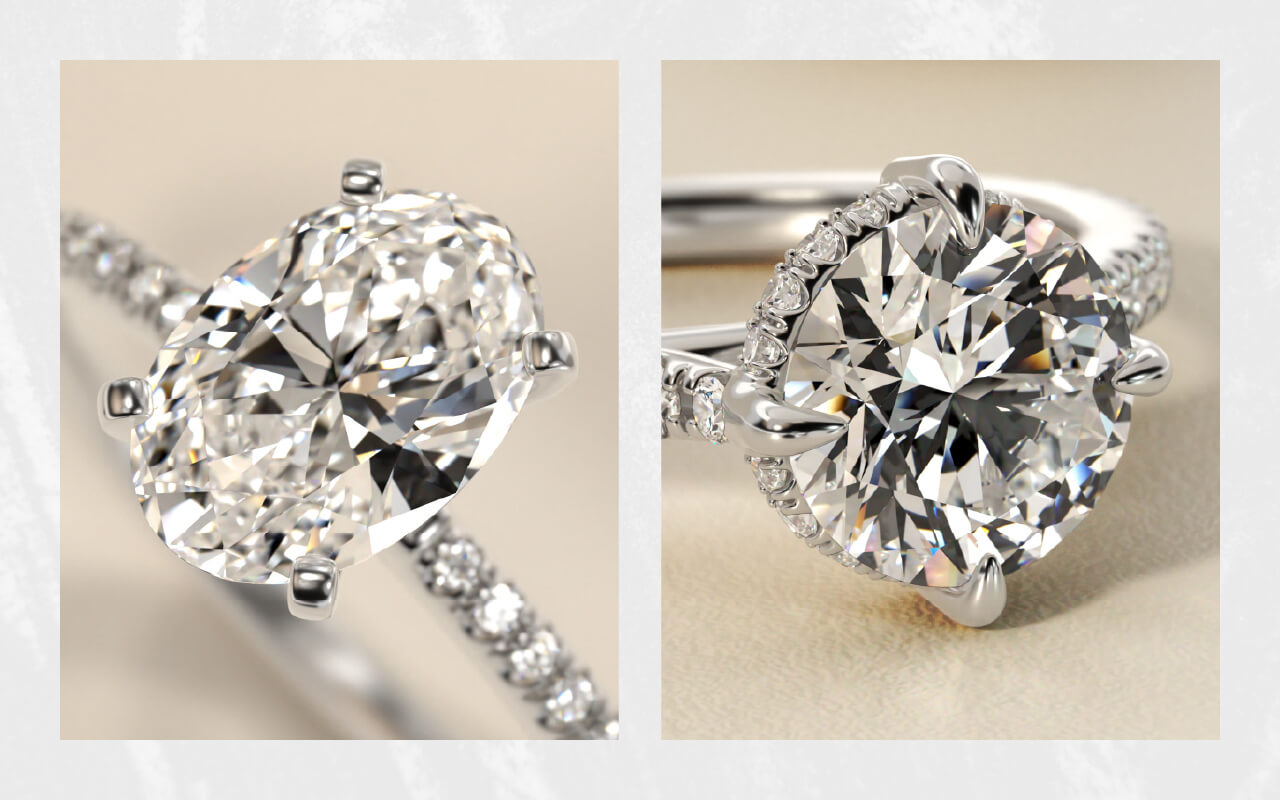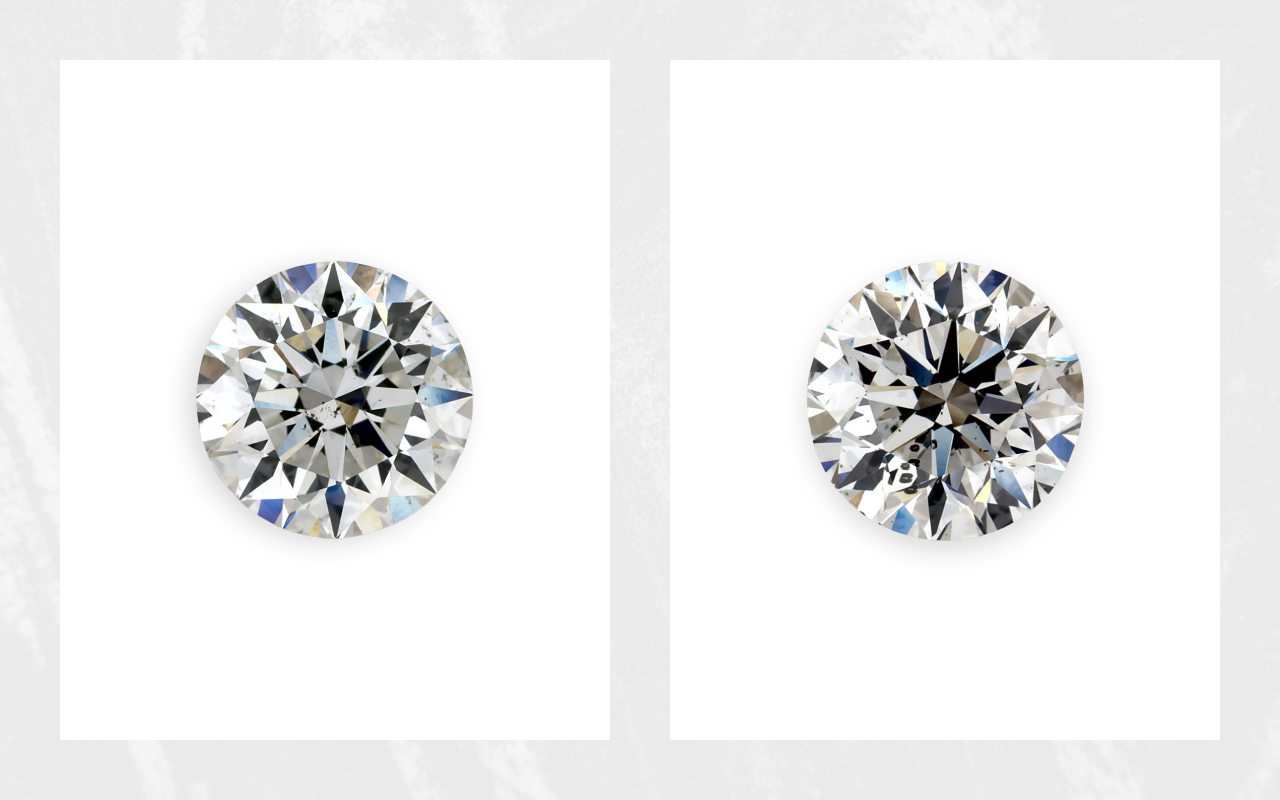
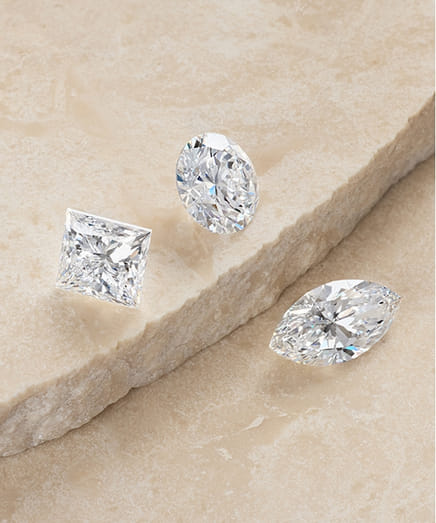

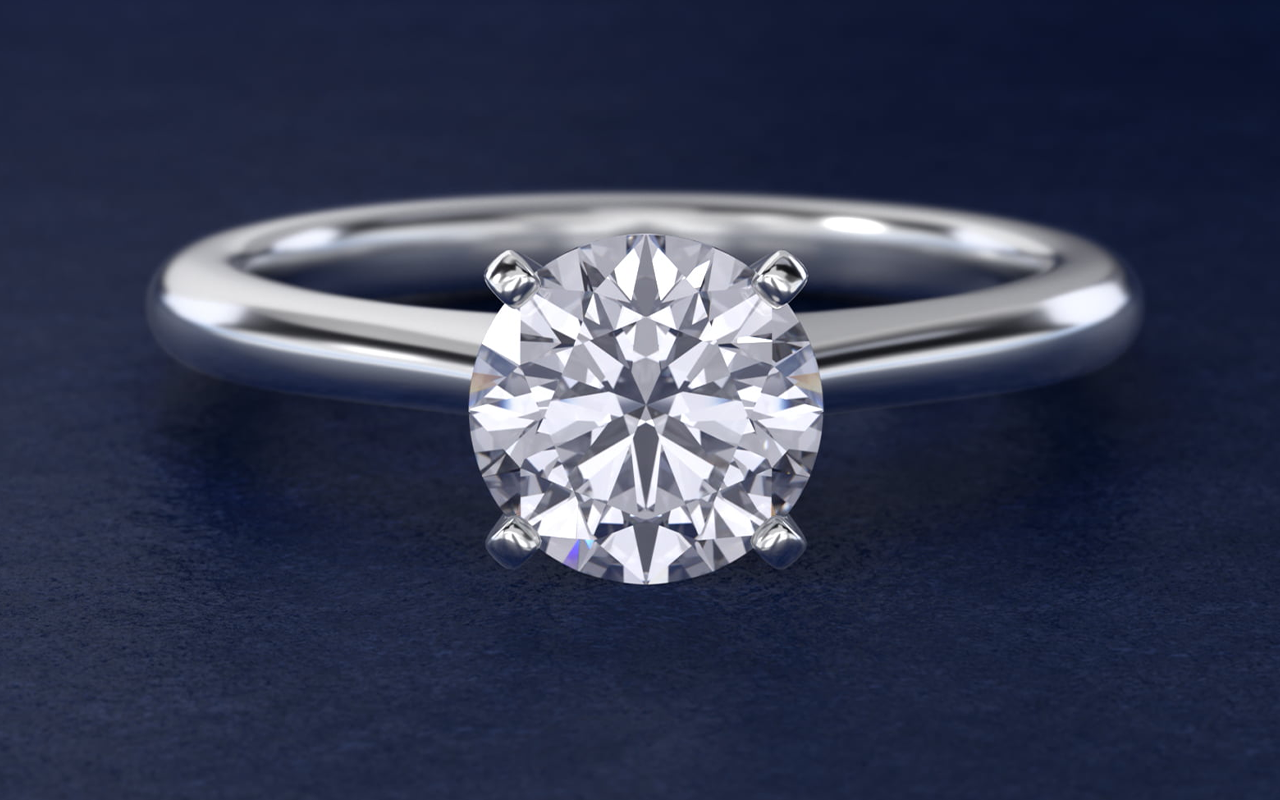
| VVS diamonds are “Very Very Slightly Included,” meaning they have no imperfections visible to the unaided eye and only extremely minor ones visible under magnification. |
Among the 4Cs of diamonds, clarity has a major influence on beauty and price. VVS diamonds sit close to the top of the clarity scale.
Though they come with higher price tags, VVS diamonds are coveted choices for those who value luxurious, near-flawless clarity in their engagement stones.
Learn what VVS means, the difference between its subgrades VVS1 and VVS2, what inclusions are, the value of VVS diamonds, and buying tips to help you decide if it’s worth it to pay for this high-clarity grading.
VVS Diamonds in the Clarity Grading Scale
VVS is a diamond clarity grading that stands for “Very Very Slightly Included.” VVS clarity diamonds are eye clean, meaning that there are no inclusions, or small imperfections, visible to the unaided eye.
Because their flaws are so minuscule, VVS diamonds are exceptionally clear, beautiful and valuable. To assess their clarity, gemologists use 10x magnification to study each diamond’s inclusions (internal flaws) and blemishes (external flaws). They note each flaw’s size, number, position, and nature.
Diamond clarity is graded by either the GIA or IGI. In the US, we most commonly use the scale standardized by the Gemological Institute of America (GIA). GIA experts follow strict standards, examining diamonds under controlled conditions, to grade diamond clarity.
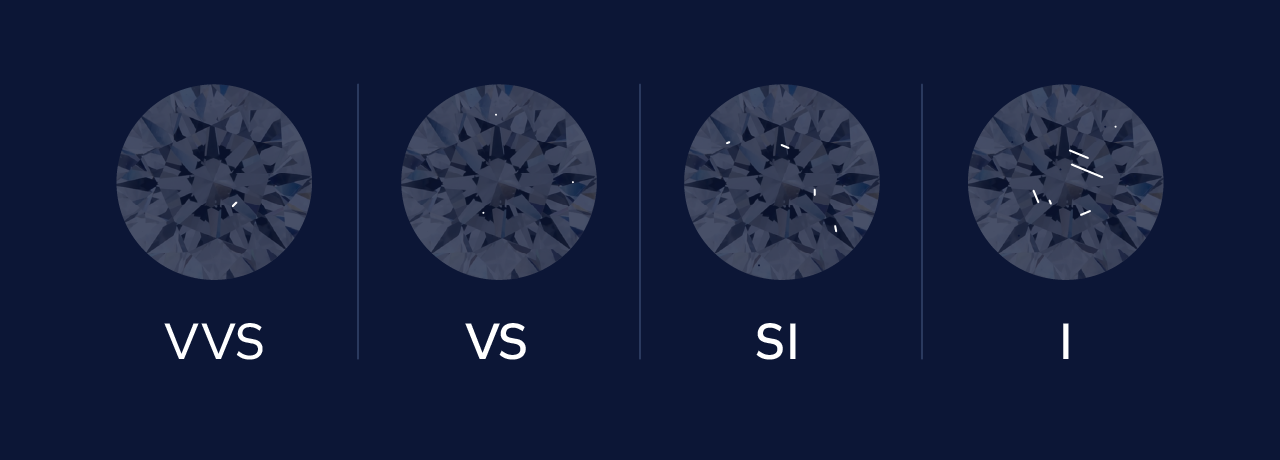
VVS diamonds sit high on the GIA’s clarity grading scale, below Internally Flawless (IF) and above VS (Very Slightly Included).

VVS Diamond Subgrades
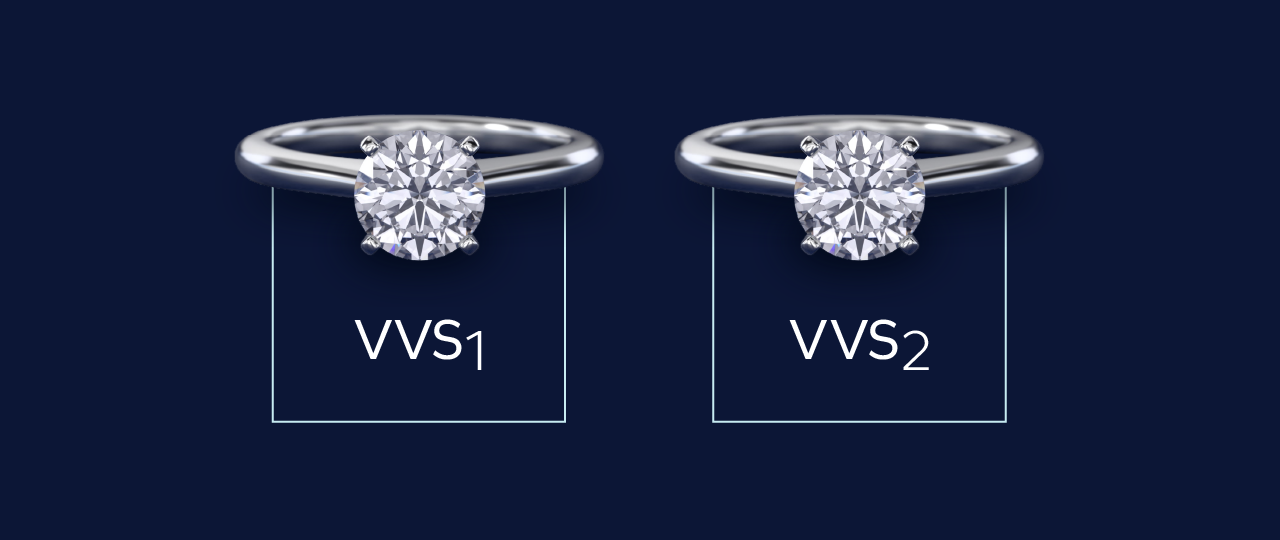
When the GIA’s experts examine diamonds in their labs, they divide VVS diamonds into two subgrades: VVS1 and VVS2. Even though the differences in these subgrades are extremely subtle and impossible to see without powerful magnification, they can have a big impact on price.
Here’s an overview of the differences between VVS1 and VVS2 diamonds:
| VVS1 Diamonds | VVS2 Diamonds | |
| Inclusions | Extremely slight inclusions visible at 10x magnification | Slight inclusions visible at 10x magnification |
| Eye-clean | Yes | Yes |
| Price | Very expensive | Expensive |
VVS1 Diamonds
VVS1 diamonds are the clearer, or less included, of the two subgrades. They are eye clean, meaning any inclusions are only visible under 10x magnification.
Even under magnification, though, inclusions are extremely difficult to find. Because they have fewer inclusions, VVS1 diamonds are rarer and therefore more expensive.
VVS2 Diamonds
VVS2 diamonds fall just below VVS1s. The differences are extremely minuscule, though. Under 10x magnification, there are slightly more prominent inclusions, though these may still be hard to find.
VVS2s are still fully eye clean, so we can’t see these inclusions without the aid of equipment. If it is of equal quality in the other three C’s, a VVS2 diamond will be slightly less expensive than a VVS1.
VVS Diamond Inclusions
Inclusions are internal flaws in a diamond that either extend into the gem from the surface or are completely enclosed inside it. These flaws result from tiny variances that occur while a diamond is exposed to tremendous heat and pressure while forming. Almost all diamonds, both natural and lab-grown, have inclusions.
Inclusions aren’t always a bad thing, as some people like the uniqueness of certain microscopic imperfections. And in a diamond with a clarity grade as high as VVS, the inclusions aren’t visible at all to the everyday eye. Any imperfections must be very tiny relative to the size of the diamond for it to earn a VVS clarity grading.
Here are some inclusions that diamond experts may find in VVS diamonds under strong magnification:
- Tiny chips: These are small, shallow nicks usually located on the outer edge of the diamond.
- Cavities: Sometimes, concave areas form, usually caused by a crystal near the surface of the diamond that is removed during its cutting process.
- Feathers: These are small fractures in the diamond’s internal structure.
- Crystals: Minerals, diamond or other, may be embedded within the diamond, usually appearing as a dark spot.
- Pinpoints: These are tiny specks of crystals.
- Clouds: Groups of pinpoints appear as a hazy cluster.
- Needles: These are types of crystals that appear long and rod-shaped.
Value and Cost of VVS Diamonds
VVS diamonds are rare, high-value diamonds. Even to a trained eye with magnification equipment, inclusions are minuscule and difficult to spot. They will therefore be available at higher price points and usually have greater resale value than diamonds of lower clarity grades.
How do VVS diamonds compare to their neighbors on the clarity grading scale? Let’s look at the grades directly above and below VVS.
| Grade | Inclusions/Blemishes | Cost (1 carat, excellent cut, F color diamond) |
| FL (Flawless) | No internal or external imperfections at all, even under magnification | $11,370 |
| IF (Internally Flawless) | No inclusions and only very tiny surface blemishes visible or under magnification | $10,330 |
| VVS (Very Very Slightly Included) | Very minor inclusions visible under magnification | $6,420 (VVS1) $5,050 (VVS2) |
| VS (Very Slightly Included) | Minor inclusions visible under magnification | $4,710 (VS1) $4,000 (VS2) |
- FL (Flawless) diamonds have the rarest clarity and are only available at very high price points.
- IF (Internally Flawless) diamonds are rare, with no inclusions and only microscopic surface blemishes.
- VS (Very Slightly Included) is the clarity grade right below VVS, and thus are less expensive. This is one of the most popular clarity grades for engagement rings because VS diamonds strike a good balance between clarity and value.
The GIA notes that a VVS1 diamond can be up to 40% more expensive than a VS1 diamond of the same color and weight. That said, if it’s important to you to have a diamond that achieves near-perfect clarity, and your budget allows for it, a VVS may be of more interest.
VVS Diamond Buying Guide
There’s a lot that goes into buying a diamond, let alone an exceptional quality VVS. And clarity is only one piece of the puzzle. Here are some tips to keep in mind when purchasing a VVS diamond:
Prioritize cut over clarity
Cut has a greater impact on sparkle and brilliance than clarity. A well-cut VS diamond may look better than a poorly cut VVS. If you’re deciding where to put your budget, prioritize an excellent or ideal cut over a high clarity grade.
Keep viewing distance in mind
High clarity grades like VVS are only noticeable up close. From an arm’s length away, it can look identical to VS and SI stones. Only opt for a VVS if the idea of owning a rare, high-grade diamond is important to you.
Consider size
Clarity grade is more noticeable in large diamonds, so as carat weight goes up, you may want a higher clarity grade like VS or VVS. For diamonds one carat and under, SI grades still look beautiful to the unaided eye and can offer better value.
Shape matters
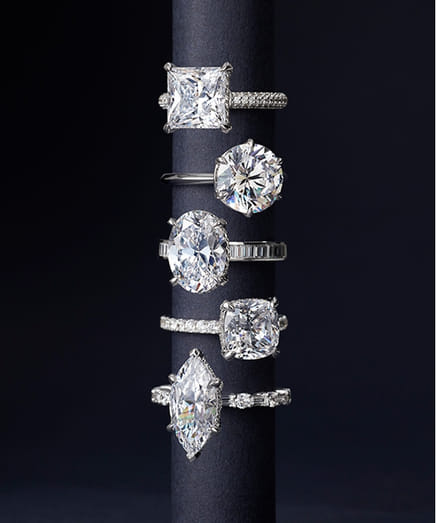
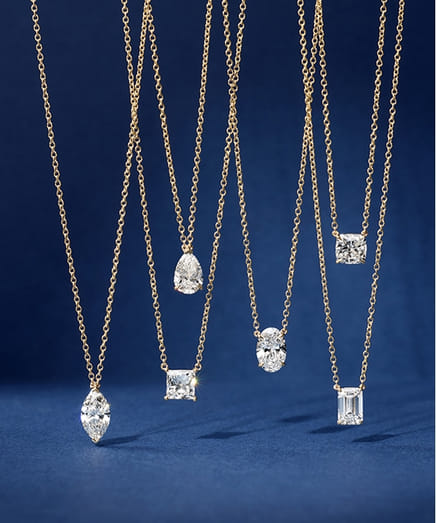
Brilliant cuts (round, oval, princess, and pear) hide small inclusions better, making clarity matter less when shopping for them. Step cuts (Asscher and emerald) are more transparent, so inclusions are more noticeable. A VVS can help achieve a clearer look with these cuts.
Get GIA certification
For authenticity and transparency, always ensure your diamond purchase comes with a GIA report. It will list the types of inclusions present, and some reports for diamonds over one carat may also include a clarity plot. This information helps you understand where inclusions sit and whether a setting can minimize their visibility.
It’s all based on preference
A higher clarity doesn’t necessarily mean a “better” diamond. Decide what matters most to you (clarity, setting design, shape, rarity, size, cut, etc.) and let that guide your choices.
Find a Dazzling VVS Diamond with Blue Nile
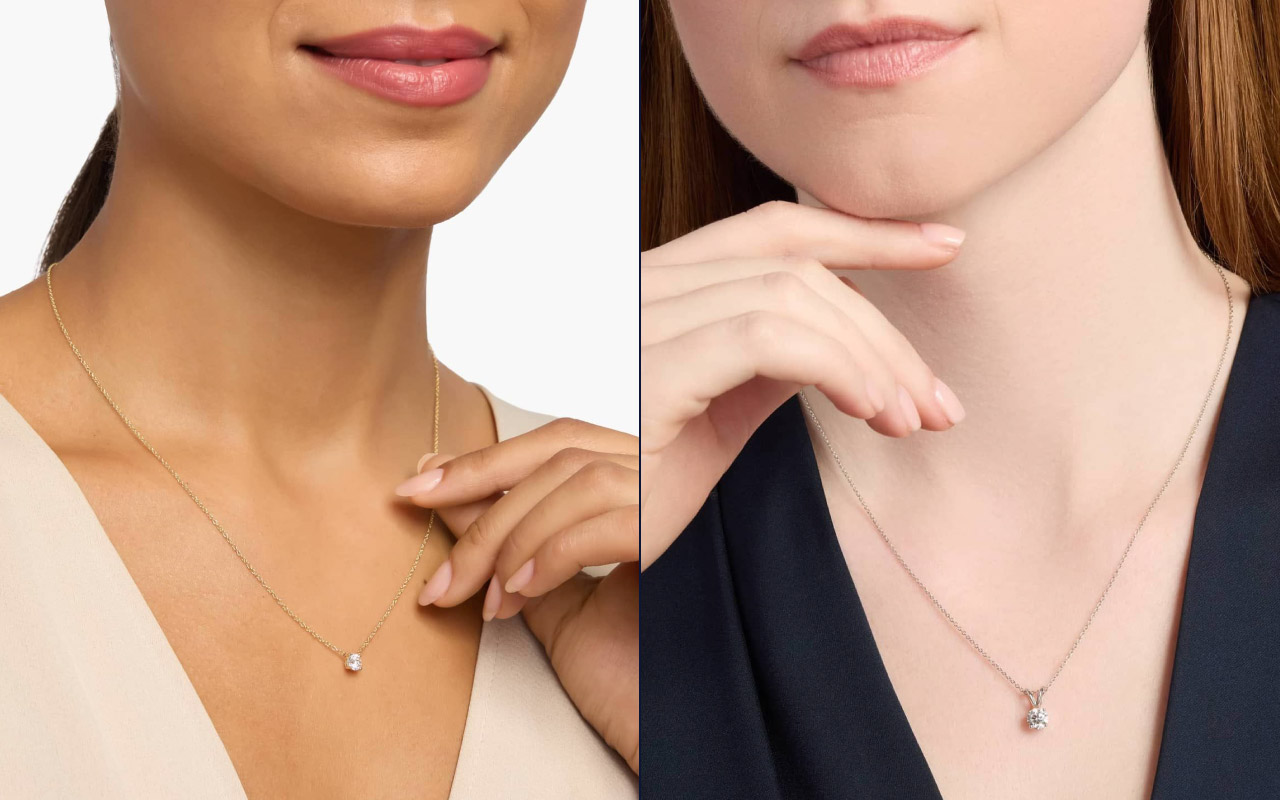
If knowing that you have a diamond that is near-perfect in clarity is important to you, a VVS diamond could be your match. VVS diamonds make exceptionally beautiful stones for engagement rings, earrings, bracelets, and pendants.
Whether you’re set on a VVS diamond or are looking at other clarity grades, Blue Nile is here to help you through the next steps. Check out our diamond buying guides to explore the rest of the 4Cs. Or, browse our selection of high-quality, curated loose diamonds to fall in love with a stone that will signify your love for a lifetime.
Frequently Asked Questions
VVS is a diamond clarity grade that stands for “Very Very Slightly Included.” This means that a VVS diamond has very few inclusions, or imperfections, within the stone.
Relative to lower clarity grades, yes, VVS diamonds are rarer and therefore more expensive. VVS diamonds sit very high on the clarity grading scale, second only to IF (Internally Flawless) and FL (Flawless). A 1-carat VVS diamond can range in price from around $5,000 to $7,000.
VVS diamonds are less included, meaning they have fewer internal imperfections, than VS diamonds.
In almost all cases, VVS and VS diamonds will be virtually indistinguishable from each other to the unaided eye. Their differences are only visible under magnification. However, VVS diamonds are technically closer to “perfect” on the clarity grading scale.
A VVS1 diamond is more expensive than a VVS2 diamond. That’s because VVS1s have slightly fewer visible inclusions at 10x magnification. However, this comparison assumes that all other quality grades in the diamonds are equal, since color, carat and cut have big impacts on price as well.

Share