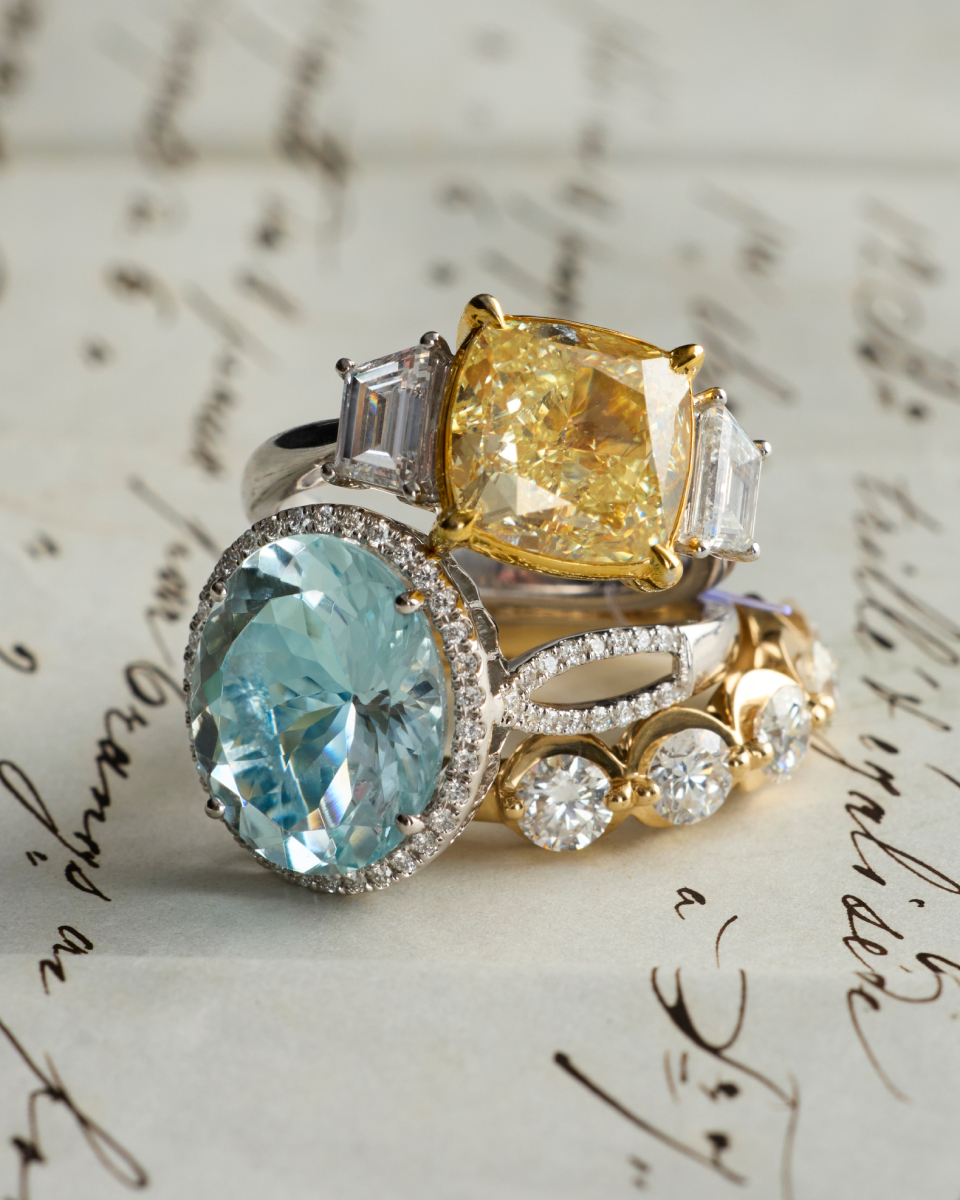
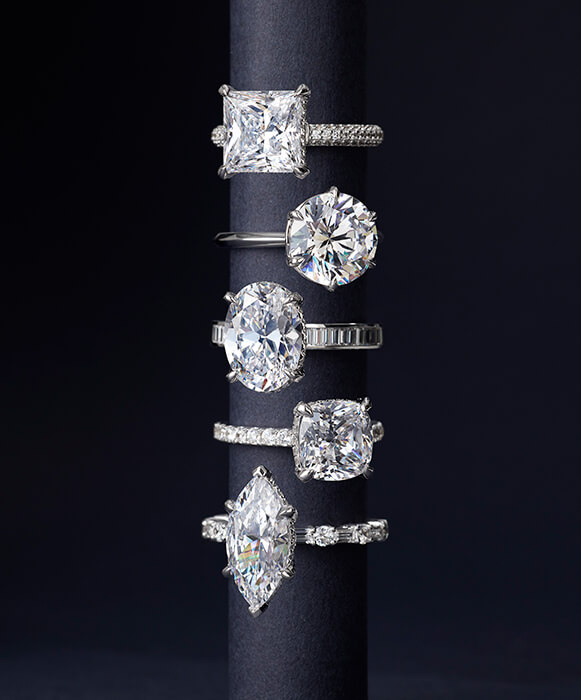
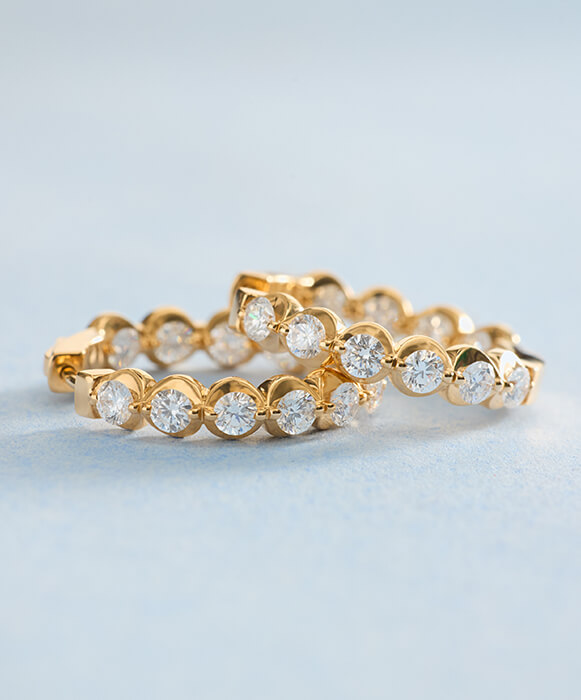
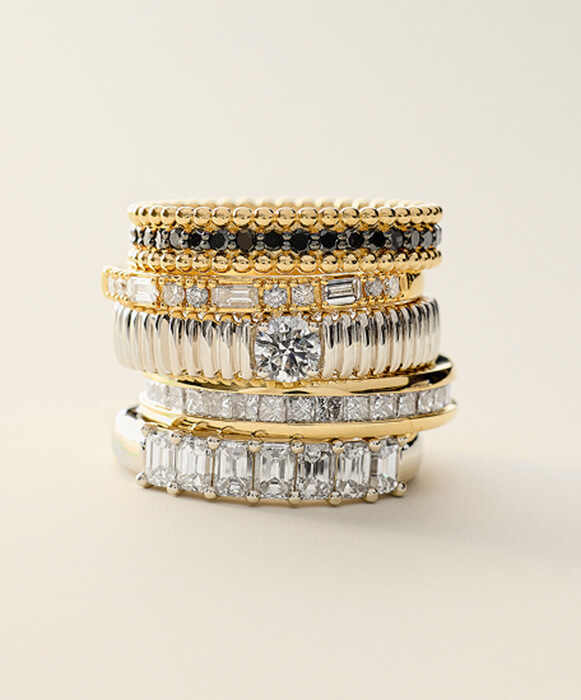
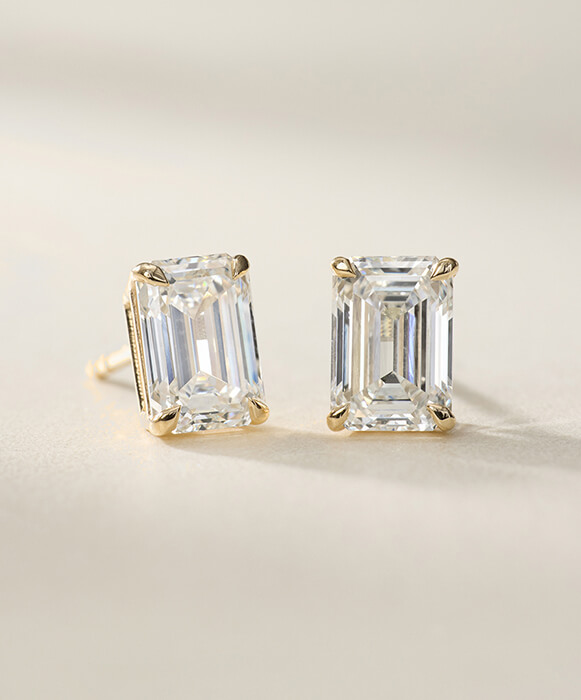

If an engagement ring is in your near future, you’re understandably digging deep to find the design that best suits you and your love.
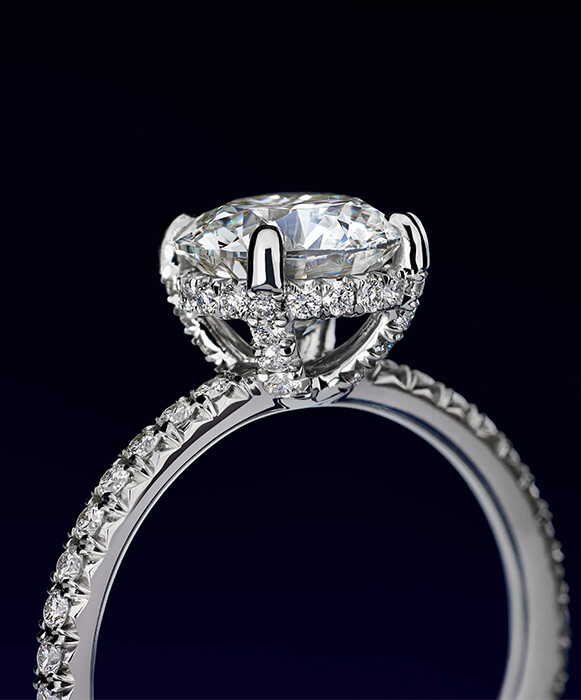
Ring prong styles are a small yet mighty piece of that search. Prongs are a type of ring setting with metal claws that cradle, lift and let light shine through a stone. Even though they’re tiny, prongs can have a powerful aesthetic impact on your ring’s center stone.
Here, we’ll expand on your typical engagement ring guide to dive deeper into each prong style and its benefits. We’ll cover prong care, ideal prong numbers and shopping tips to help you find your dream ring.
Types of Ring Prong Styles Overview
| Prong Type | Best for | Appearance | Stone Security |
| Round | Round, oval and cushion stones | Round dots | Secure |
| Claw | Round, oval and princess cuts | Pointed talons | Extra secure |
| Double | Large stones | Two sets of round or claw prongs | Highly secure |
| Split | Large stones | Each prong separates into two | Extremely secure |
| V | Stones with pointed corners | L or V shape hugs the corner | Highly secure |
| Flat/Tab | Rectangular or square stones | Square at the ends | Secure |
| Bezel | Large stones | Rim of metal around stone | Maximum security |
Round Prongs
Key features:
- Best for: Round, oval and cushion stones
- Appearance: Round dots that create a minimal, classic and traditional look
- Stone Security: Secure
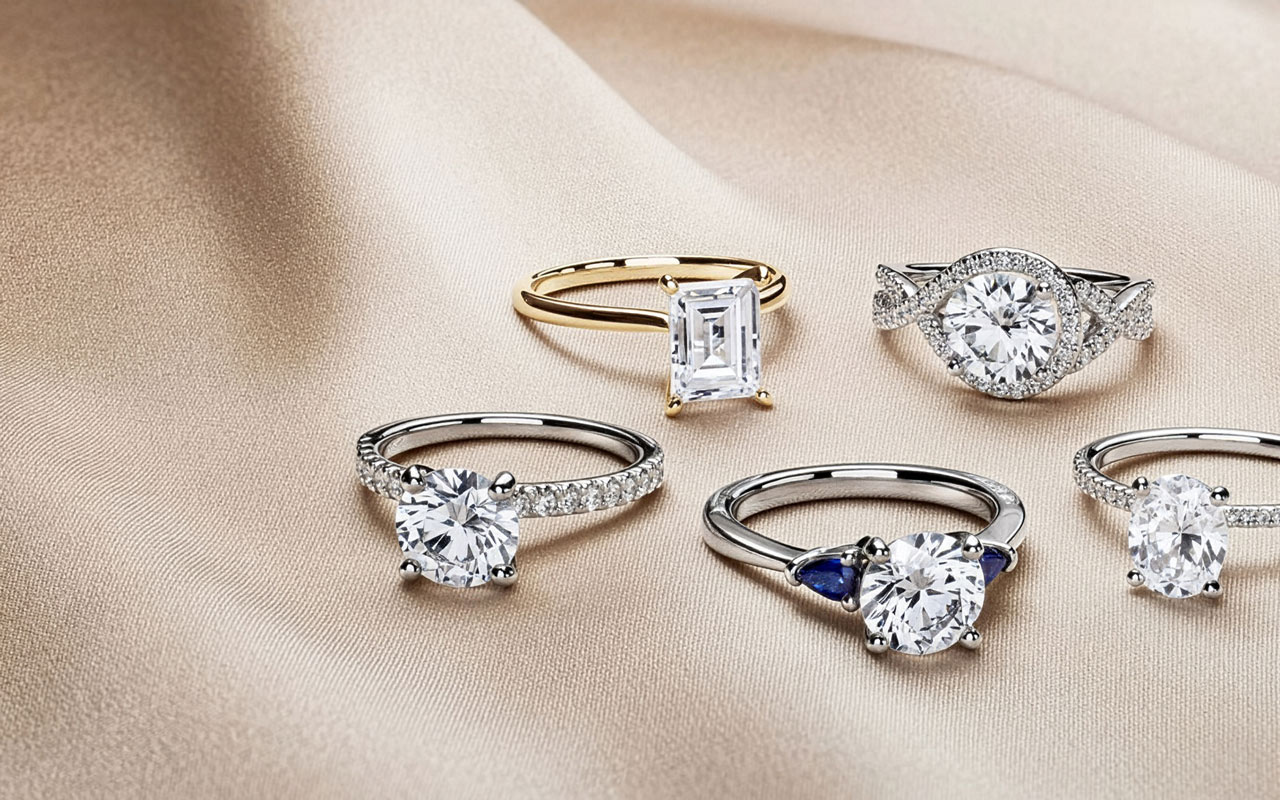
Round prongs, or ball prongs, are the most common prong type for engagement rings. With circular tips, they hold the diamond in place above its girdle, or outer-edge line.
From an aesthetic standpoint, round prongs look like little balls surrounding the diamond. Their curved edges pair well with round stones.

Claw Prongs
Key features:
- Best for: Round, oval and princess cuts (allows maximum light to enter these already sparkly shapes)
- Appearance: Pointed like talons, though minimal and lets the stone shine
- Stone Security: Extra secure
Pointed and sleek, claw prongs are a minimalist choice. They have narrow pointed tips tapering toward the stone as they hold it in place.
In contrast with round prongs, claw prongs are thinner, slightly more secure and less noticeable. A variation is the petite claw prong, which is even more delicate-looking and covers less of the stone.

Double Prongs
Key features:
- Best for: Large stones, so as to not overwhelm them, and shapes with sharp corners like emerald and Asscher for extra protection
- Appearance: Heavier weight as a design element, though elegant-looking
- Stone Security: Very secure
Double prongs are two sets of prongs paired together. These can take the shape of either round or claw prongs.
Double prongs are extra secure, so they’re often a good choice for large-carat diamonds and other big stones. The double prongs, while drawing more attention to themselves, also add an interesting design element because they’re not as common as single prongs.

Split Prongs
Key features:
- Best for: Large stones that need more support; enhances round and cushion cuts with an interesting, delicate look
- Appearance: Draws more attention as a design element, refined and visually interesting; allows more light to hit the stone
- Stone Security: Extremely secure
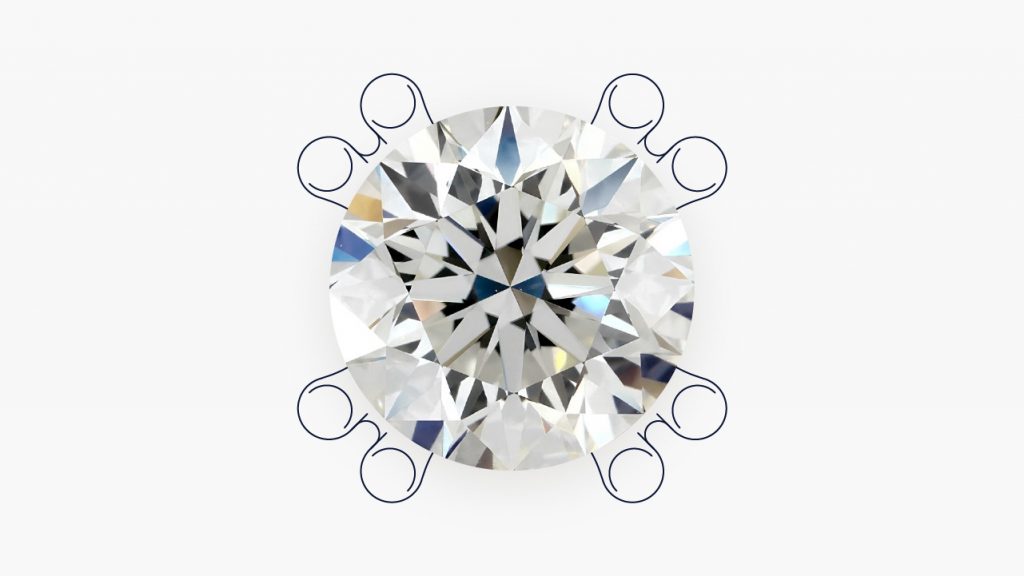
With split prongs, each prong separates into two separate prongs at its tip. This creates more points of contact with the stone, giving it more security. Split prongs also allow more light to reach the stone. More light exposure enhances the gem’s brilliance and sparkle.
V-Prongs
Key features:
- Best for: Stones with pointed corners (pear, marquise or princess shaped diamonds)
- Appearance: Bold V shapes outlining the edges of the stones
- Stone Security: Highly secure
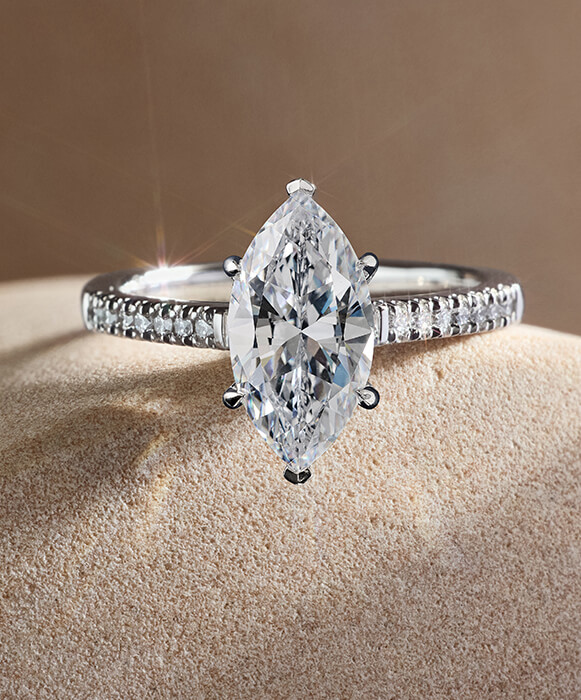
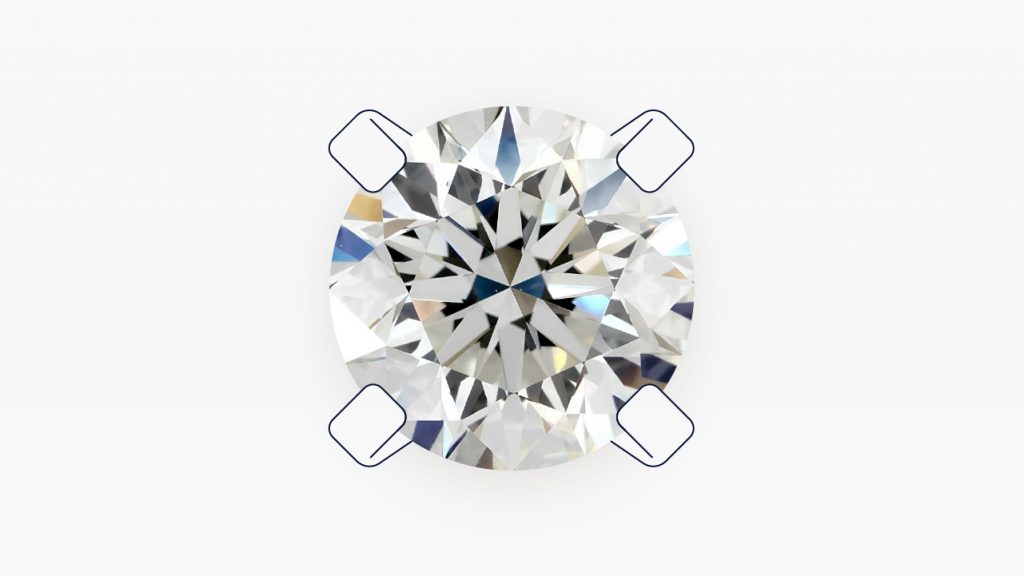
Also called corner or boot prongs, V-prongs are meant for diamond shapes with pointed corners. The prongs, shaped like Ls or Vs, surround and protect the sharp, pointed corners of pear, marquis or princess shaped diamonds.

Flat/Tab Prongs
Key features:
- Best for: Emerald and baguette cut stones
- Appearance: Unique, vintage and geometric appearance
- Stone Security: Secure
Tab, or flat, prongs are square at the ends. They’re a less common type of prong and thus add an eye-catching design element to the ring and stone. Because of their geometric look, they can appear vintage and Art Deco-inspired. They pair well with rectangular or square stone shapes.
Bezel
Key features:
- Best for: Larger stones of all shapes, especially fancy cuts like emerald or marquise to protect their sharp edges
- Appearance: Sleek and modern, draws attention
- Stone Security: Maximum security
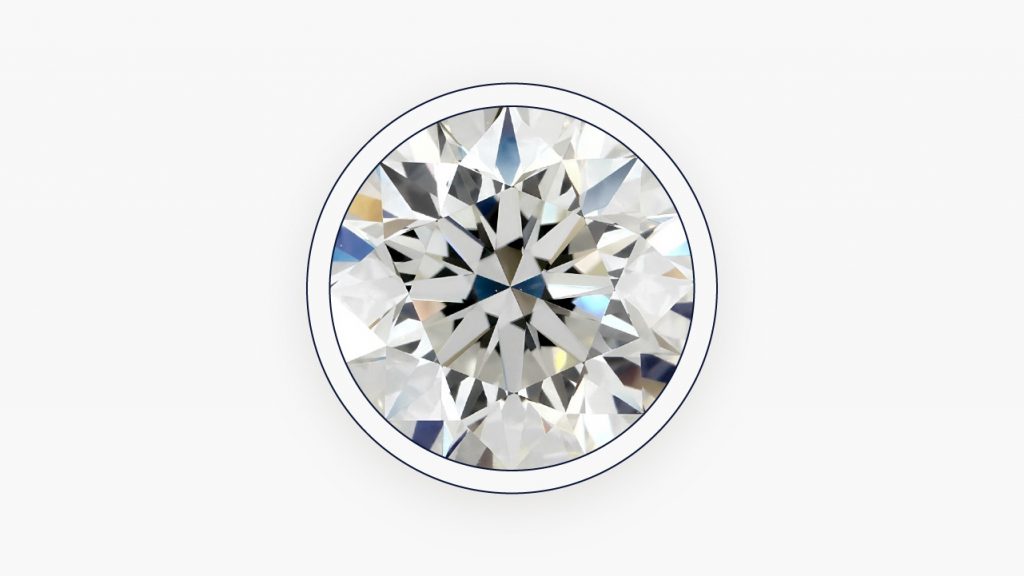
In contrast with prong settings, bezel ring settings include a rim of metal enclosing the stone. A bezel setting provides more secure protection to the stone, guarding its edges from chipping or scratching.
A bezel also makes a strong statement, standing out from the more common prong settings. However, it allows less light to enter the stone, so your diamond may not sparkle as much as it would in a prong setting.
Choosing the Right Number of Prongs for Your Ring
Typically, you can have four, six or eight prongs on a ring. The more prongs, the more secure the stone. As you go up in carat weight, it may be a good idea to set the stone with more prongs. However, the more prongs you have, the more likely they are to draw attention away from the stone.
Four prongs are most common, creating a square appearance around the stone while holding it in place.
Six prongs are more effective at providing security for larger diamonds, and they tend to enhance round shapes by more fully surrounding the stones.
Eight prongs are less common, but jewelers may recommend them for extra security if you have very large stones.
| Number of Prongs | Prong Styles | Best for | Ideal gem cuts |
| Four | Round, claw, flat/tab, V | Up to 2 carats | Emerald, asscher, princess, oval, radiant |
| Six | Round, claw | 2 carats or above | Round brilliant, marquise, cushion cuts |
| Eight | Double, split | 3 carat or above | Round brilliant and oval |
How to Choose a Prong Setting
Though jewelers may have suggestions, the prong setting is ultimately up to you. You’ll want to balance protection for your stone with the setting that strikes you as the most beautiful and suitable to your daily life.
Consider these factors when deciding on a prong setting:
- Aesthetic: Choose prongs that match your unique style. While round and claw prongs are classic and let the diamond shine above all else, tab prongs have vintage charm and bezels have trendy flair.
- Lifestyle: If you’re very active or work with your hands a lot, consider a sturdier prong setting that will help give your stone extra protection. These include bezels, double prongs and V prongs.
- Metal Color: If you’re a fan of cool tones, opt for white gold or platinum. If you’re drawn to warmth, opt for yellow or rose gold instead. Many prongs match the metal color of the band. A contrast, like white gold prongs on a yellow gold band, makes the diamond look icier.
- Shape of your diamond: Round prongs pair well with rounded stones, while V and tab prongs work better for pointed stones and square ones, thanks to their geometric look.
How to Care for Your Ring’s Prongs
Prongs can come loose or bend from snagging on things. They can also just wear down over time. Since your prongs play such a crucial role in keeping your stone in place, it’s important to keep an eye on them and care for them properly.
Here are some tips on how to care for your prongs:
- Regularly check that they aren’t loose, bending or missing.
- At least once a year, go to a jeweler for a professional cleaning and inspection. They can tighten or replace any loose or broken prongs.
- When you clean your rings at home, gently scrub the prongs with mild soap, warm water and a soft-bristled brush.
- Don’t let your ring come into contact with harsh chemicals.
- Take off your ring before going to the gym, working in the garden or other heavy-lifting activities.
- Store your ring in its own soft pouch or compartment to keep it from scratching against other metals.
Find Your Dream Ring with Blue Nile
Now that you’ve explored ring prong styles, has one caught your eye? Or perhaps you’re between two and would like to browse more photos to fully make up your mind. So many exciting decisions go into picking out your engagement ring, and prong style is just one of them.
Blue Nile is here to help you symbolize your devotion and capture that electric love for all your life. Browse our collection of rings to see what speaks to you today.
While no type of prong is “best,” round and claw diamond prongs are especially popular for engagement rings. That’s because round and claw prongs have a classic, minimalist look that’s protective yet still shows off as much of the stone as possible.
A ring usually needs four or more prongs. Four prongs show off more of the diamond, but if you have a larger carat stone, a jeweler may recommend six or even eight prongs to keep it securely in place. Round stones are also often set with six prongs to complement their shape.
A four prong, solitaire setting is the most popular prong setting. It’s popular for showing off the center stone, usually a diamond, by letting the maximum amount of light pass through it.
Prong style refers to the design of the little claws that hold a stone in place on a ring. The prong style affects how secure the stone sits in the ring and how protected it is, as well as how it looks.
Platinum and gold are typically the best prong settings. Platinum is very durable, while gold comes in white and yellow colors that can easily match your existing aesthetic.
Yes, you can upgrade your engagement ring and get the prongs changed through a professional jeweler. They will most likely consult you about your desired style, discuss what’s best for the stone’s security and may reset the stone to change the prongs.
V prongs and bezel settings protect a stone’s edges better than other prong styles. If you have an active lifestyle, they may prevent the stone from snagging on things.
Six prongs, instead of four, may also help improve the security of your stone.
Yes, you can damage your ring’s prongs by snagging them, hitting them against things and through general daily wear. Prongs can get bent, loose, wear down, or even break. That’s why you should regularly get your ring inspected and repaired by a jeweler.

Share